
Original: $160.00
-65%$160.00
$56.00The Story
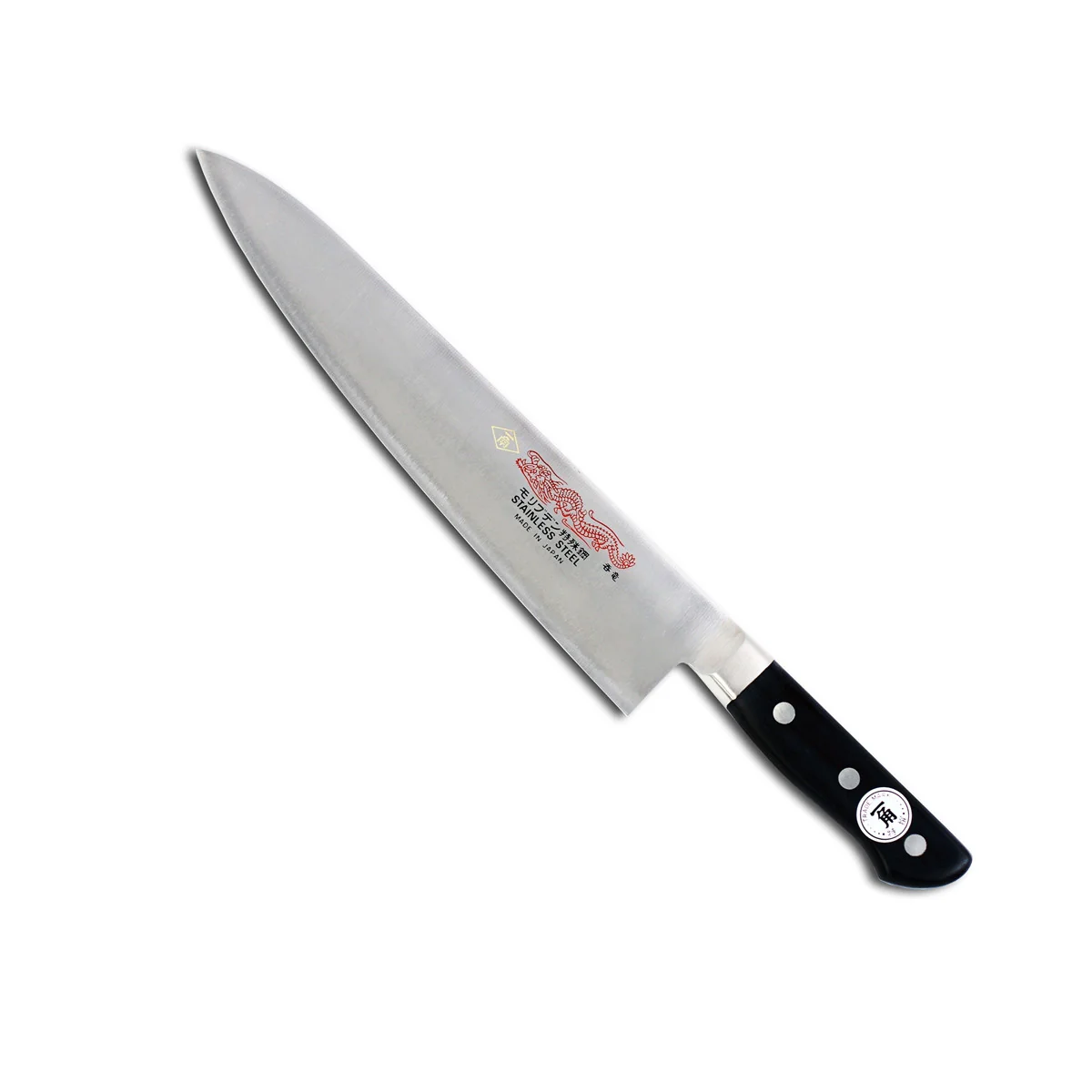
Sakai Takayuki TUS series is made with AUS8 stainless steel from Japan. This steel offers a very good balance of ease of sharpening, a strong edge, and rust resistance. It is a great choice for both professionals and serious home cooks.
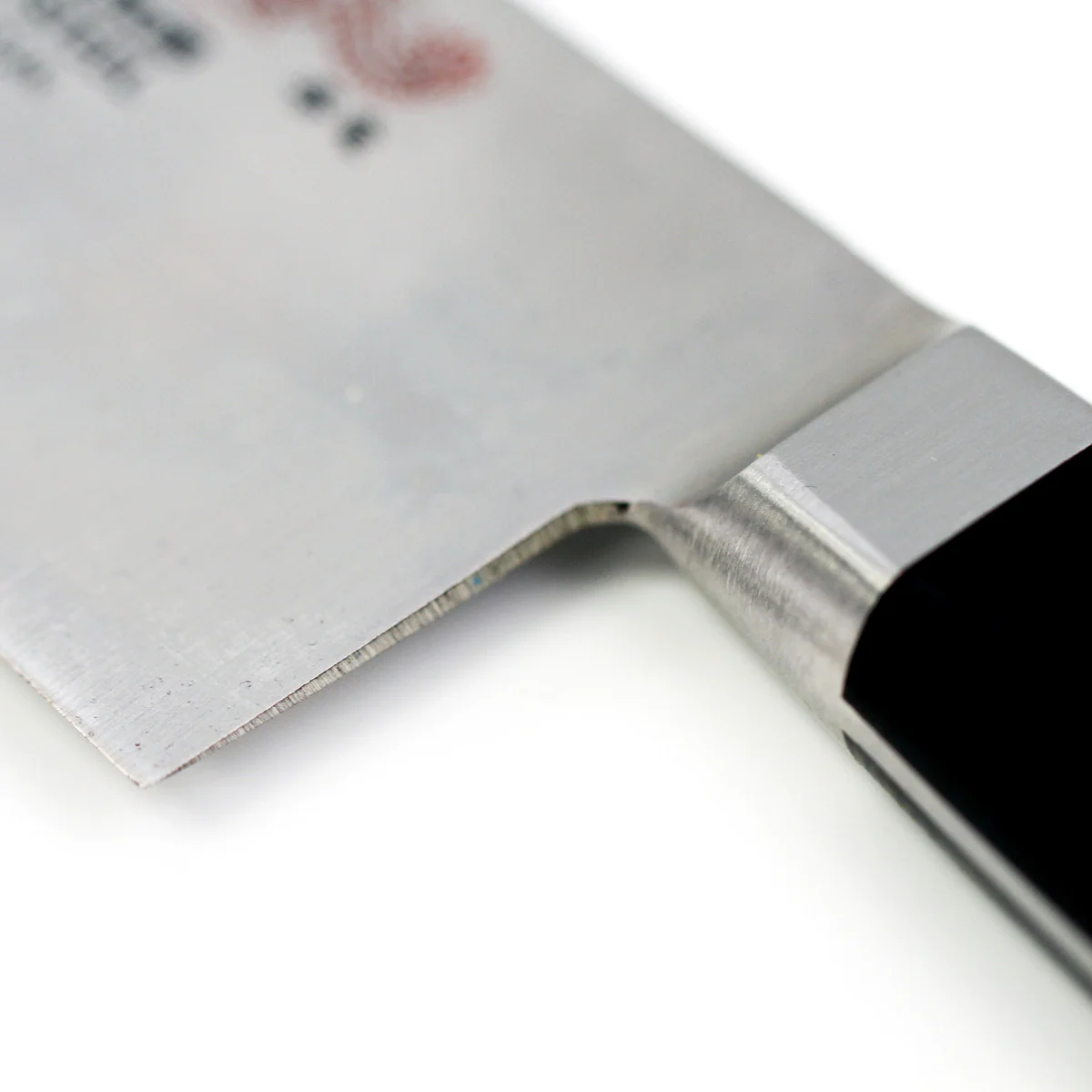
The blade is slightly thinner than knives in its class, giving you a smooth and sharp cutting feel. Despite the thinner profile, it still has good toughness, helping prevent chipping.
The handle is full tang with reinforced Pakka wood. It feels stable in the hand and looks clean and modern.
This knife is simple to maintain and reliable for daily work, making it a solid Japanese knife at a fair price.
Specifications
- Brand: Sakai Takayuki
- Style: Gyuto Chef Knife
- Length: 240mm (9.4")
- Weight: 6.2 oz (176g)
- Blade Height at Heel: 46.6mm (1.8")
- Spine Thickness above Heel: 2.2mm (0.09")
- Blade Steel Type: AUS-8 Stainless Steel
- Handle Material: Reinforced Pakka Wood
- Hardness: 59 HRC
- Bevel Angle Ratio: 50/50
- Construction: Monosteel
- Cover: Not included
Gyuto Knife
Gyuto (literally “cow sword”) is the Japanese interpretation of the Western chef’s knife. Despite its name, it is a true all‑purpose knife, comparable in versatility to a santoku and suitable for meat, vegetables, and fish. Many cooks consider a gyuto or chef’s knife the single essential knife in the kitchen. Compared to German‑style chef’s knives, gyutos typically have a flatter edge profile and a thinner blade, which favors precise push‑cutting over rock‑chopping. Because they are thinner at the edge and spine, they cut more efficiently, but care should be taken not to torque the blade while cutting to minimize the risk of chipping.

Details & Craftsmanship
Every detail has been carefully considered to bring you the perfect product.

Details & Craftsmanship
Every detail has been carefully considered to bring you the perfect product.

Details & Craftsmanship
Every detail has been carefully considered to bring you the perfect product.

Details & Craftsmanship
Every detail has been carefully considered to bring you the perfect product.

Details & Craftsmanship
Every detail has been carefully considered to bring you the perfect product.

Details & Craftsmanship
Every detail has been carefully considered to bring you the perfect product.

Details & Craftsmanship
Every detail has been carefully considered to bring you the perfect product.
Description
Sakai Takayuki TUS series is made with AUS8 stainless steel from Japan. This steel offers a very good balance of ease of sharpening, a strong edge, and rust resistance. It is a great choice for both professionals and serious home cooks.
The blade is slightly thinner than knives in its class, giving you a smooth and sharp cutting feel. Despite the thinner profile, it still has good toughness, helping prevent chipping.
The handle is full tang with reinforced Pakka wood. It feels stable in the hand and looks clean and modern.
This knife is simple to maintain and reliable for daily work, making it a solid Japanese knife at a fair price.
Specifications
- Brand: Sakai Takayuki
- Style: Gyuto Chef Knife
- Length: 240mm (9.4")
- Weight: 6.2 oz (176g)
- Blade Height at Heel: 46.6mm (1.8")
- Spine Thickness above Heel: 2.2mm (0.09")
- Blade Steel Type: AUS-8 Stainless Steel
- Handle Material: Reinforced Pakka Wood
- Hardness: 59 HRC
- Bevel Angle Ratio: 50/50
- Construction: Monosteel
- Cover: Not included
Gyuto Knife
Gyuto (literally “cow sword”) is the Japanese interpretation of the Western chef’s knife. Despite its name, it is a true all‑purpose knife, comparable in versatility to a santoku and suitable for meat, vegetables, and fish. Many cooks consider a gyuto or chef’s knife the single essential knife in the kitchen. Compared to German‑style chef’s knives, gyutos typically have a flatter edge profile and a thinner blade, which favors precise push‑cutting over rock‑chopping. Because they are thinner at the edge and spine, they cut more efficiently, but care should be taken not to torque the blade while cutting to minimize the risk of chipping.